

See more by planning less
Arriving in a new area often feels like a starting gun: what can we do today, what do we absolutely not want to miss? In South Limburg too, with its hills, timber-framed farmhouses and endless walking trails, that temptation is always there. Yet something special happens when you decide to stay longer—say, at De Smockelaer—and consciously keep your list short. Space appears, not only in the day, but above all in how you look and what you remember from your holiday in South Limburg.
The pressure of a packed schedule
You may recognise it: a few days off, a new place, and suddenly everything is crammed in—early breakfast, walk, village, museum, viewpoint, quickly reserve a restaurant too. At the end of the day you’ve seen a lot, but has it really sunk in?
Planning gives a sense of control—the idea that you won’t miss anything and that you’re making the most of your time. Yet something else quietly slips in with it: pressure instead of breathing space, haste instead of attention. Even a beautiful hilly landscape then becomes scenery that slides past, rather than a world you’re allowed to live in for a while.
Those who choose slow travel and to stay longer—during a multi-day stay at De Smockelaer, for example—often notice the pace naturally drops. Not because there’s nothing to do, but because not everything has to happen straight away. Today can be half-done; tomorrow there’s another day.

Seeing or really noticing
There’s a difference between seeing and noticing. Seeing is what happens when you drive past a viewpoint: stop for a moment, take a photo, move on. Noticing is what emerges when you take the time—when you register how the light shifts over the course of the day, how the birdsong changes as evening falls.
Staying overnight in South Limburg, rather than just passing through, makes that difference tangible. At De Smockelaer, for example, a view doesn’t become just a pretty picture but a familiar backdrop. After two days you recognise the path where that one walker with a dog always appears, the moment when the sun creeps exactly over the ridge, the quiet right after waking up.
By staying longer, your attention shifts from ticking off places to slowly getting to know one place. And it’s precisely there—in that small difference—that depth appears.
The second day, and what time does to you
On the first day, everything is new: the route there, the smell in the stairwell, the view from the window. You explore, look around, make plans, and still feel a bit of home’s pace in your body. But then comes the second day.
The second day is often quieter. You know where the coffee machine is, how the front-door handle sounds, where the first footpath begins. That frees up space in your head: no longer busy orientating, but open to what stands out. The colour of a timber-framed façade in the morning light, the slow drift of mist in the valley, a brief chat with someone you also saw yesterday.
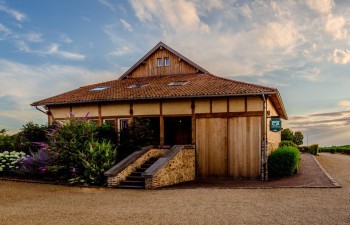
This “second-day effect” becomes stronger if you deliberately plan less. Instead of filling every hour, perhaps just a walk after breakfast and then seeing what the day brings. On a holiday in South Limburg that can almost feel unnatural—there’s so much to do around De Smockelaer that you could easily rush from viewpoint to village.
Yet something changes in the experience when you don’t. A single walk then becomes not an item on a list, but the backbone of the day, with room around it for chance encounters, a spontaneous bench in the sun, a detour because that one path looks inviting.
A place that reveals itself slowly
Places need time to show themselves. On day one you see the outlines; on day two the details stand out; on day three you suddenly understand a little why people want to live here. It’s as if a landscape unfolds layer by layer.
During a multi-day stay you notice how the atmosphere shifts between morning and evening, how the sound of crickets or cows slowly becomes familiar, how the air smells different after a night of rain. At De Smockelaer, with views over the rolling hills, that almost naturally becomes part of your daily rhythm.
Those who stay longer don’t just get to know the outside world better, but their own pace too. Perhaps you’ll notice you feel less need to be constantly on the move—that one good conversation on a terrace or a quiet hour with a book gives more satisfaction than three sights in a row.
When nothing is planned and everything stays with you
Ask people afterwards about their best moment on a trip, and it’s rarely about the tightly scheduled part. It’s often the unexpected bits: a detour, a spontaneous encounter, a sunset you almost missed because you actually wanted to stay inside.
Unique memories are hard to organise. What does help is time—time in which nothing has to happen; in which you can keep sitting because the view is beautiful; in which a conversation can run on; in which you have a second cup of coffee without checking the clock.

Staying longer in one accommodation—for example, several nights at De Smockelaer—removes the feeling that you constantly need to be somewhere else. Because the base is already right, you no longer have to chase the next highlight. You can return to the same chair, the same room, the same patch of garden, and that’s exactly what makes it easier to notice what’s changing.
The calm of not being on the move all the time
Packing up again and again, moving on, figuring out routes, parking, checking in, checking out—it takes energy. Sometimes you only notice that when you skip that whole sequence for a while. Slow travel doesn’t necessarily mean travelling further afield or for longer; it can also mean consciously choosing one place, one rhythm.
On a holiday in South Limburg that’s especially tangible. The area around De Smockelaer invites slow exploration: the same walk at different times of day, visiting a village again but via a different route. Because you don’t have to cram everything into a short time, the urge to rush disappears.
Instead of the question of what else you still have to do, the focus shifts to what you’re already experiencing now: the way the light brushes the hills, the soft murmur in the distance, the silence as evening falls and the day closes without you feeling you’ve missed anything.
Time, trust and the art of staying longer
Perhaps the essence of staying longer isn’t so much time, but trust. Trust that you’ll see enough, even if you don’t plan everything tightly. That the best moments arrive between the lines—in that slightly too-long breakfast, in an unexpected turn on a footpath, in the realisation that you don’t actually need to be anywhere else but here.
A multi-day stay in one place—such as at De Smockelaer in South Limburg—then changes not only your programme, but your whole way of looking. You arrive less as a visitor and a little more as a temporary resident, with your own small habits, familiar corners and recognisable sounds.
Perhaps that’s what a place truly lets you take home: not the number of things you’ve seen, but how familiar it was allowed to feel for a while. How you remember the morning beginning softly, with light slowly creeping into the room; how the day wasn’t packed, but spacious enough for everything that really stayed with you.

Staying longer, planning less—it sounds simple. Yet sometimes it takes more courage than a packed programme, because you’re choosing attention over distraction. Choosing those few places you really get to know, instead of many that glide past you. And somewhere, between the hills of South Limburg and the stillness of an evening when nothing more is required, it becomes clear how rich that actually is.
Stay until the calm settles in
Give yourself the time not only to visit a place, but truly to live in it—even if only for a few days. Let the view, the light and the day’s small rituals do their work, and discover how much more there is to see when not everything is planned.
How do I know whether staying longer suits me?
If you find you often come home exhausted after a trip, staying longer in one place can be a relief. Instead of being on the move all the time, you let the rhythm of the surroundings set your pace. You don’t have to change everything at once; choosing just a few nights in the same location and planning less can be enough to feel the difference.
Doesn’t a multi-day stay get boring after a few days?
Many people fear that staying longer in one place will lead to boredom, whereas the opposite often happens. Through repetition you actually start to see different things—small shifts in light, sound and atmosphere. Where on the first day you mainly explore, later you begin to taste, smell and notice more. In this way a calm emerges that doesn’t feel empty, but full of detail.
Won’t I miss highlights if I plan less?
You might indeed miss an attraction or a viewpoint mentioned in a guide. In return, however, you gain something else: the experience of truly settling into a place, with time to wander, linger and slow down. Often it’s the unexpected moments that stay with you better than the carefully planned outings, because they aren’t steered by expectation.
Why can a holiday still feel so rushed?
That often has to do with the tendency to want to do as much as possible in limited time. Each day fills up with activities, leaving little space for breathing and chance. When you choose slow travel and consciously stay longer, more breathing space naturally appears—simply because not everything has to fit into that one day anymore.
Is slow travel only for long trips or faraway destinations?
No. Slow travel has less to do with distance and more with attitude. A holiday in South Limburg can also be a slow travel experience if you decide not to hop from place to place, but to stay—perhaps in a peaceful accommodation surrounded by nature. The choice to truly stay somewhere is usually closer than you think.
How can I start planning less without feeling restless?
You can start small by setting just a few anchors in the day rather than a tight schedule—for example, a walk or a shared dinner. Leave the rest deliberately open, as space in which things are allowed to emerge. It helps to accept beforehand that you won’t see everything, but you will notice more—and that this is where the richness of staying longer lies.